Wednesday, December 1, 2010
Labdariai Info Shop - Free University
Saturday, November 20, 2010
Rudamina, Lithuania
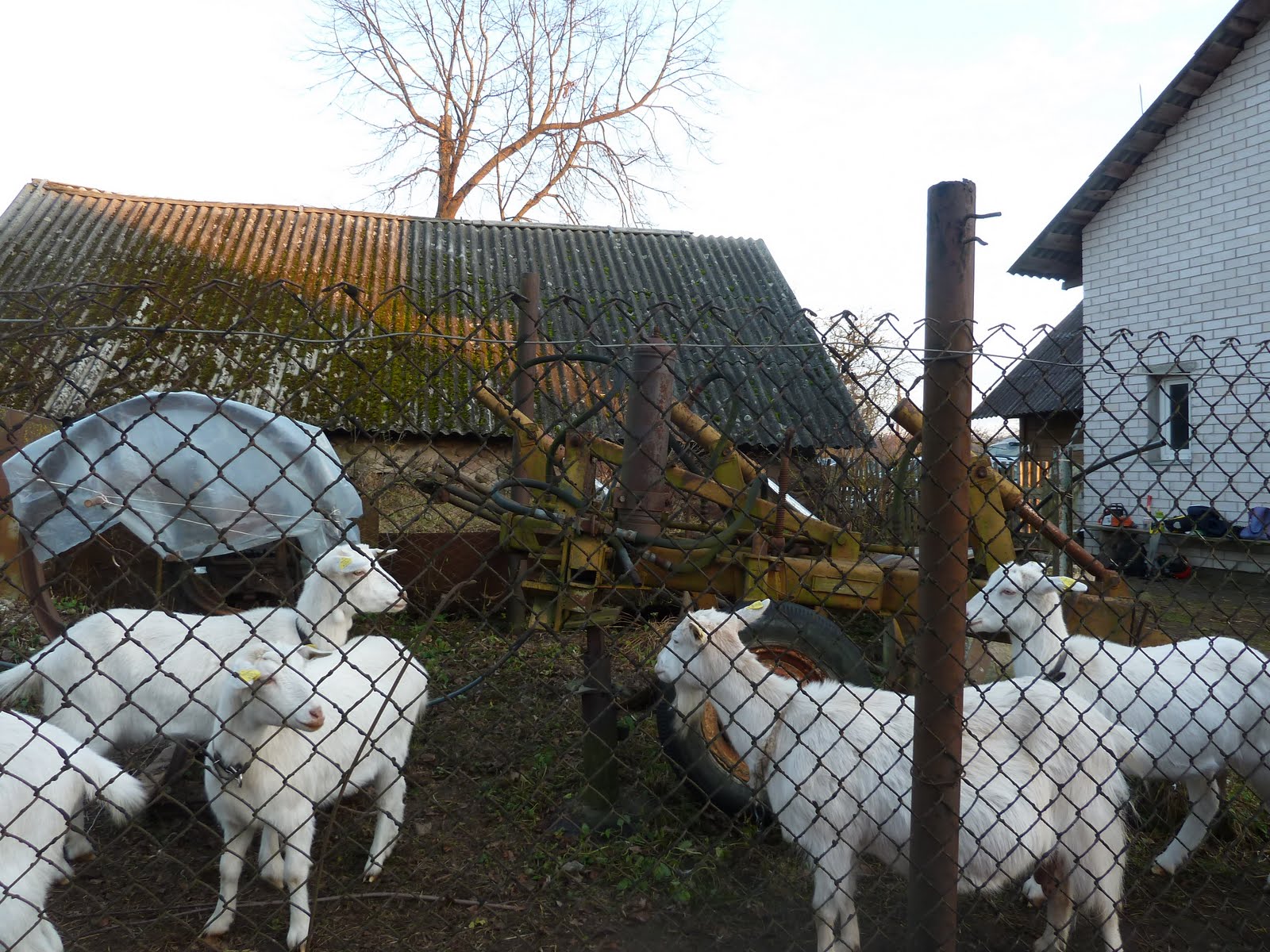
Traditional rituals are alive in Lithuania. One example of this is the blessing of a young couple and their yearling farm (photo). A respected elder presented a benediction of good wishes followed with a splash of vodka above the couple’s heads. Gifts were given, such as a pair of clippers to prune the goat’s hoofs. This celebration began with a full morning of work by farm friends, whom completed tasks best done collectively. In early afternoon, a large wooden table in the barnyard was filled with foods brought by the volunteers and host: homemade goat and cow cheese, fresh, black breads, preserves made with plums and pumpkin (yum!), and kvass, which I could not stop drinking. The preparation and consumption of cepelinai was the highlight of our feast.
Cepelinai is a Lithuanian national dish. This large dumpling is made from grated potatoes that are stuffed with minced meats, usually pork or beef. Preparation requires peeling and grating raw potatoes (best a potato high in starch). Excess liquid is squeezed out using a cheesecloth. After allowing the potato starch to settle, the liquid is poured off and the starch is added back to the potatoes. Boiled and than mashed potatoes are kneaded with the raw, grated ones, plus a dash of salt. An egg-sized amount of the mixture is formed into patties, with spoonfuls of the previously prepared minced meats placed into the center of the patties. The patties are closed around the filling forming an oval-football shaped dumpling. Traditionally, the filling is made from ground beef or pork, dry cottage cheese or mushrooms with salt and spices. Next, the dumpling is carefully placed in salted boiling water and simmer for approximately 30 minutes. Cepelinai are eaten with bacon, or melted sour cream, or as our host made, an onion-bacon-mushroom sauce. This is a meal for gourmandizers. Yummy!
Thursday, November 18, 2010
Blood and Sugar: Lithuanian Power Bar
Lithuanian hematogenu is a post-communist food product now sold as a food supplement or even a medicine. Chocolate was expensive during Soviet times, and this ‘healthy’ candy was an inexpensive sweet enjoyed by children. The ingredients in these ‘power bars’ comprised of sugar, condensed milk, a starch, oil, flavorings, and blood… yes, blood! Hematogenas are a natural source of iron made from pig or calf blood and processed as an edible animal blood.This is an attractive selling feature for those who are lacking in iron and desire a tasty, healthy source of natural iron. In Lithuania, the leader in production of this health-food is Hemo2Gen, which alongside of its “classic” tasting hematogena, has 3 new product line: Hema2Gen Imuno with ginger, Hema2Gen Extra Vitamins with almost ½ the daily recommended vitamin C, and B12, and Hema2Gen Energy with the vitamins that the Extra line has plus some caffeine (45g). A 100g bar of Hema2Gen contains 10mg of iron. This product can be purchased at most pharmacies, supermarkets, and kiosks. Having sampled Hemo2Gen Extra, the taste was not disagreeable, given that it was very sugary, but disappointingly, no essence of blood.
Saturday, November 13, 2010
Saturday Morning Organic Market at the Mall
Thursday, October 21, 2010
American Comestibles = Fat America

(Photo 1)
At 21 years of age, Ieva went from Lithuania to Buffalo, NY on a student work-exchange program. Her job was cleaning the stairwells, windows, and common areas to a 5-story middle-class apartment dwelling. During her 5 months in Buffalo, Ieva had a profound experience with American food. Although she worked daily throughout the week, she gained 5-7 kilograms (10 - 15 pounds). Restaurant and fast food were not part of her daily meals. Her breakfasts were light, mainly cereals, and she ate sandwiches for lunch. During evening meals, Ieva cooked primarily vegetables, pasta, rice, turkey, ham, or chicken. On average, Ieva consumed meat once a day. Her portions and dishes replicated what she typically consumed in Lithuania. The only deviation in her diet was she began eating ice cream near the end of her work-exchange program. Upon returning to Lithuania, she ate her mother’s traditional Lithuanian foods. Although Ieva ate significant proportions and was idle, within one month, she resumed her normal body weight.
(photo 2)
Milda’s story is similar. Her student work-exchange afforded her two jobs and a 16 hour day. At night, she cleaned a hotel and dined on scrabbled eggs, bacon, sausage, and bread for breakfast. Her day job was at behind the counter in a deli department where she had the freedom to eat what she wanted. Her choice of food were salads dressed with mayonnaise, and occasionally fried chicken. She rarely ate out or at home. Within 5 months, Milda gained 10 kilos (22 pounds). Soon after returning to Lithuania, and without any conscious effort, Milda returned to her normal weight. She noted that her husband had spent two work exchange stints in the US and each time came back to Lithuania overweight, to the extent that he was unrecognizable.
(photo 3) Vilma is a third example of this American food-weight phenomenon. She worked in a hotel and a fast-food restaurant in Maine for 4 months, and worked daily from 8 am to 2 am. Her diet was primarily fries, pizza sticks, chicken nuggets and ice cream. Her clothes size went from 0 to size 6 and her weight increase by 8 kilos. This gain was lost after less than a month back on her Lithuanian diet. Vilma commented about her American food experience that, “you can eat and eat and eat and not feel full.” The most noticeable difference was that the American people “ate from the box for their meals.”
The above stories are examples of the horrors of the American diet. It is not an uncommon experience for Lithuanians who have spent significant time in the US. So, why have these people gained so much weight in such a short period of time under ‘slave-like’ working conditions? The reasons are not transparent, or are they? Could there possibly be ingredients and additives within USA foods which cause metabolic interferences? Can growth hormones fed to factory raised animals cause weight gain in humans? What are the effects of salt, sugar, and fat, saturated in our food, have on our body chemistry? What affects do neurochemicals in additives, preservatives, and artificial flavorings have on the human body?
Obviously there is something catastrophically wrong with American comestibles. A recent news report indicated that 75% of Americans are either overweight or obese. The CDC states that the direct medical cost of obesity per year is approximately $147 billion, 50 billion more than spent on cancer. Former FDA Commissioner David Kesslerk‘s book,"The End of Overeating: Taking Control of the Insatiable American Appetite" looks at how fat, sugar, and oil is concentrated in America‘s diet and how this has contributed to our national health crisis. Is it possible to overhaul our food system before we collapse under the weight of fat America? Is the current food system ”terrorism“ against our own citizens? What kind of future can a nation have if the majority of its citizens are unhealthy?
Wednesday, October 13, 2010
Mushrooms Mushrooms Mushrooms
Immediately after harvest, mushrooms must be freed of forest debris by scraping or brushing. Next they are boiled in salt water. Mushrooms can now be used in soups or salad or fried in butter. Mushrooms can be preserved in sterile jars in brine, or dried.