Thursday, December 2, 2010

Yalta Restaruant


Food justice is when communities exercise their right to grow, sell, and eat healthy food such that the food is fresh, nutritious, affordable, and culturally appropriate. At the heart of food justice is respect and regard for the land, animals and people who grow food sustainably.

Julia Smiskal is a food justice advocate and she operates and co-owns the Yalta Restaurant. Located in Vilnius, the Yalta is what Julia calls “a sustainable food restaurant” where “nature decides the menu” (only local, seasonal, foods are used and bought direct from local farmers).

Growing up in rural Lithuania, Julia recognizes how large-scale farming is destroying village economy and autonomy. “My conviction is that small farmers can provide us with all the food we need.” 90% of farmers in Lithuania are small-scale, with the average size of approximately 3-4 hectares, yet the government and large agri-businesses perceives them as a primitive, inefficient form of agriculture. Throughout her life, Julia has eaten from her parent’s small farm. “This is the kind of food I eat therefore this is what I prepare for my customers.” After studying social development in Bordeaux, Julia found her niche in food preparation. “I love it. For me to be in the kitchen, to have a restaurant, is very concrete. My hands give a result everyday.”

Woven into the management of the Yalta are social, economical, and ecological constructs. The Yalta supports ecologically responsible farmers and acts as a conduit for restaurant patrons, in which many are seeking quality food. Furthermore, neighboring denizens of the Zverynas district can find a social community-based space where art, music, and film abound. The ambiance inside this 100 year-old historically-registered house is welcoming, where the furniture is recycled, the water is free and served from the tap. In addition, next to the restaurant sits a large greenhouse which provides the Yalta’s summer kitchen with veggies such as lettuce, spinach, chard, carrots, and several types of herbs.

Patrons can peruse a notebook which provides information about the dozen or so farmers who are responsible for the food they are eating. At the local farmers’ market, Julia purchased for the upcoming week: bread, apples, eggs, milk, yogurt, cheese, potatoes, beef, chicken and butter. Seasonal foods are prepared according to traditional recipes. “Traditionally, during Lithuanian summers, very little meat was consumed maybe small portions of smoked meats. Summer heat could spoil fresh meats. Vegetables, greens and cold soups were ideal for long hours working in the fields.”

For early December, the Yalta was serving fried fish from local lakes, pumpkin soup, beet root salad, and apple pie. Uninviting was the snow and bitter wind outside but inside the Yalta, there radiates a warmth and aroma found only in those kitchens and dining spaces where care and love reside.


Wednesday, December 1, 2010

Labdariai Info Shop - Free University


Labdariai Info Shop, aka Free University, is a grass roots space in the center of Vilnius. Started 6 years ago in an apartment flat, a handful of youths were active in sharing music, food, and publishing zines. Today, the collective of youths and location have change, but the desire to squeeze more out of their culture have not. The Info Shop now hosts a vegan cafe, a lending library, and music center. Movies, mini-concerts, and presentations with discussions are held here. Presently, there is discussion on developing a model for a CSA or Coop where local farmers could use the Info Shop as a distribution center. A colony of worms from my home are now in the cafe to dispose of some of the cafe's refuse. Pictured are several of the organizers shredding paper for bedding for the new worm bin. Also pictured are carrot pancakes, made with pureed, local carrots, a little starch and seasoning.


Saturday, November 20, 2010

Rudamina, Lithuania

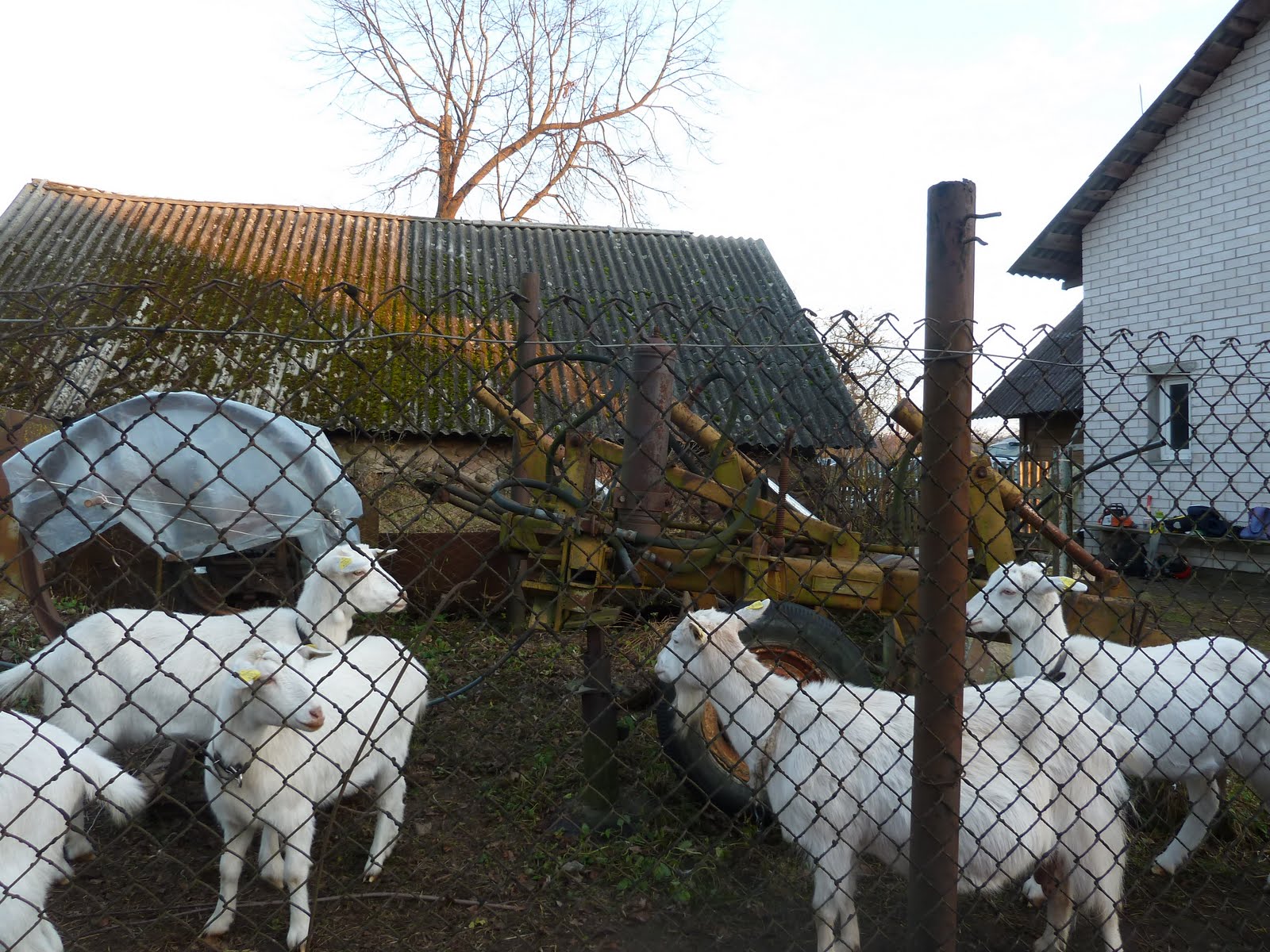
Traditional rituals are alive in Lithuania. One example of this is the blessing of a young couple and their yearling farm (photo). A respected elder presented a benediction of good wishes followed with a splash of vodka above the couple’s heads. Gifts were given, such as a pair of clippers to prune the goat’s hoofs. This celebration began with a full morning of work by farm friends, whom completed tasks best done collectively. In early afternoon, a large wooden table in the barnyard was filled with foods brought by the volunteers and host: homemade goat and cow cheese, fresh, black breads, preserves made with plums and pumpkin (yum!), and kvass, which I could not stop drinking. The preparation and consumption of cepelinai was the highlight of our feast.

Cepelinai is a Lithuanian national dish. This large dumpling is made from grated potatoes that are stuffed with minced meats, usually pork or beef. Preparation requires peeling and grating raw potatoes (best a potato high in starch). Excess liquid is squeezed out using a cheesecloth. After allowing the potato starch to settle, the liquid is poured off and the starch is added back to the potatoes. Boiled and than mashed potatoes are kneaded with the raw, grated ones, plus a dash of salt. An egg-sized amount of the mixture is formed into patties, with spoonfuls of the previously prepared minced meats placed into the center of the patties. The patties are closed around the filling forming an oval-football shaped dumpling. Traditionally, the filling is made from ground beef or pork, dry cottage cheese or mushrooms with salt and spices. Next, the dumpling is carefully placed in salted boiling water and simmer for approximately 30 minutes. Cepelinai are eaten with bacon, or melted sour cream, or as our host made, an onion-bacon-mushroom sauce. This is a meal for gourmandizers. Yummy!


Thursday, November 18, 2010

Blood and Sugar: Lithuanian Power Bar

Lithuanian hematogenu is a post-communist food product now sold as a food supplement or even a medicine. Chocolate was expensive during Soviet times, and this ‘healthy’ candy was an inexpensive sweet enjoyed by children.  The ingredients in these ‘power bars’ comprised of sugar, condensed milk, a starch, oil, flavorings, and blood… yes, blood!  Hematogenas are a natural source of iron made from pig or calf blood and processed as an edible animal blood.This is an attractive selling feature for those who are lacking in iron and desire a tasty, healthy source of natural iron. In Lithuania, the leader in production of this health-food is Hemo2Gen, which alongside of its “classic” tasting hematogena,  has 3 new product line: Hema2Gen Imuno with ginger, Hema2Gen Extra Vitamins with almost ½ the daily recommended vitamin C, and  B12, and Hema2Gen Energy with the vitamins that the Extra line has plus some caffeine (45g). A 100g bar of Hema2Gen contains 10mg of iron.  This product can be purchased at most pharmacies, supermarkets, and kiosks.  Having sampled Hemo2Gen Extra, the taste was not disagreeable, given that it was very sugary, but disappointingly, no essence of blood.

Saturday, November 13, 2010

Saturday Morning Organic Market at the Mall


Panorama is one of 5 malls in Vilnius and every Saturday it hosts a small farmers' market that offers fruits, meats, vegetables, honey, and herbs from local sources. Local organic produce is not difficult to find in this country full on family owned gardens and farms. There are six farmers' markets in Vilnius which offers seasonal products. The variety of apples and flavors are extraordinary. Honey production has a deep history and the varieties and quality is outstanding... some of the best I have tasted. My neighbor brought me pumpkin, beets, onions, apples, and honey from their parent's garden. Gardens provide an enormous amount of Lithuanian's food, especially with the recent sky-rocketing prices of food over the last several years.