chicken). Also, his demeanor, attitude, and philosophy regarding farming, the environment, and personal life epitomize Aglaia, Euphrosyne, and Thalia’s joy and goodwill toward life.
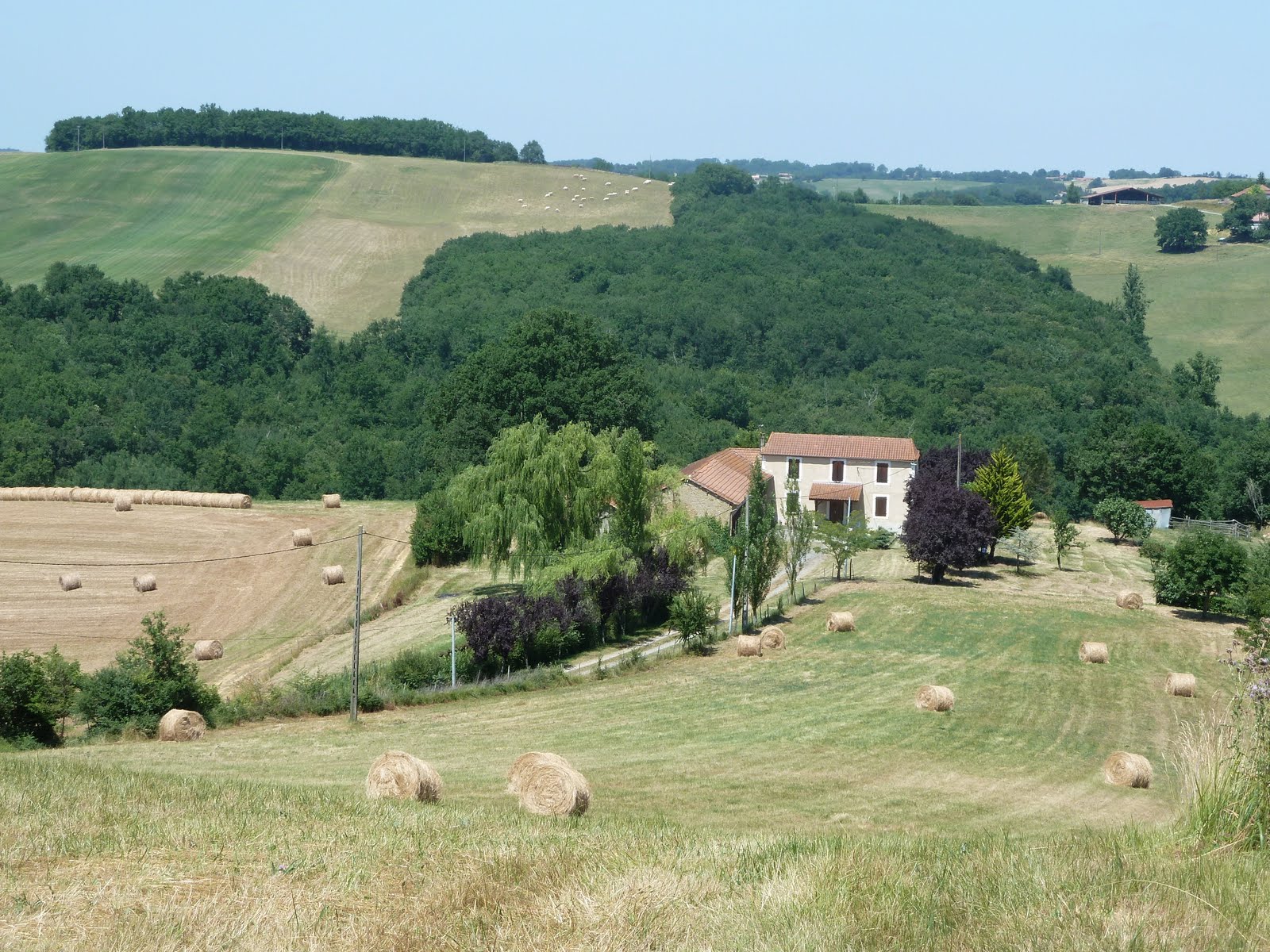
Located in the village of Cayron, in the departments de la Haute-Garonne to des Huates-Pyrénéenes, Masson’s farm reflects not only traditional farming, but a progressive philosophy that is unique to this region and is cutting edge at best. Christophe and his wife Stephanie are diligently working within their community and globally to exemplify the merits of rethinking the art of farming. As active members of Slow Food
The manner in which Christophe handles his animals is rare or non-existent in commercial farming. Never does he beat or use electrical prods as a method in herding. While relocating several pregnant cows, Christophe and Stephanie coaxed the animals very patiently, never shouting, but speaking gently, to keep them calm and trusting. While loading one of the pregnant cows into the trailer, he conducted acupressure to calm and relax the stressed animal. In addition, he uses homeopathic remedies over antibiotics and other commercial treatments. For example, instead of insecticides, honey is applied around the oxen’s eyes to detour pesky flies.
By mixing traditional and his own methods of raising calves and geese for veal and foie gras, Christophe affords respect and the utmost care. These methods may take more effort and time, and result in lesser amounts of product, the overall result is in satisfaction that there is no cruelty to the animal, reflecting the outstanding taste and product quality.
Christophe’s care and respect does not stop with his animals. Appropriate livestock densities and rotations are applied in his land use program, which encourages the natural wildlife and plant life to co-exist without overgrazing or habitat destruction. He believes that the commercial agriculture which dominates the landscape in the region, most of which livestock feed is grown, is not sustainable. Destructive amounts of fossil fuels, pesticides, and fertilizers used today, could ideally be eliminated where natural areas, grasslands, vegetables, fruits, and grains can be cultivated for direct human consumption Ironically, Christophe says “We eat too much meat” and promotes consuming it less frequently, as people have done in the past.
Farming not for money’s sake but for the art of farming, Christophe states, ‘That if you put love and care into what you make, the results reflect this.’ When asked about his philosophy of eating, he answered that there is no difference from how you make love to your lover and the way you eat. Alan Watts in his essay Murder in the Kitchen states, “Whatever is unlovable on the plate was unloved in the kitchen and on the farm.” and “Any animal that becomes me should enjoy itself as me.”
The Three Graces preside over banquets, dances and pleasurable social events and so does Christophe’s savory, uniquely rich meats. Honestly, I think the Four Graces for Christophe are his magnanimous wife and three lovely children.
Thank you Christophe, Stephanie, Mimée, Ange and Aélys for opening your home and kitchen to me. It brought me back to my childhood farm!
For information about the black pig of Bigorre, Mirandaise ox, Gers goose, and Gasconne turkey:
www.slowfoodfoundation.org/eng/presidi/lista.lasso?lista=si&id_nazione=73&id_tipologia=http://gasconne.com/index.php?option=com_content&task=view&id=3&Itemid=6
http://www.noirdebigorre.com/
http://www.monpaisgourmand.fr/fiche_identite.asp?CodeProduit=15&ViensDe=LesIncontournables